

In this guide
Open enough photographs of beautiful interiors and a strange thing begins to happen.
The rooms start to merge.
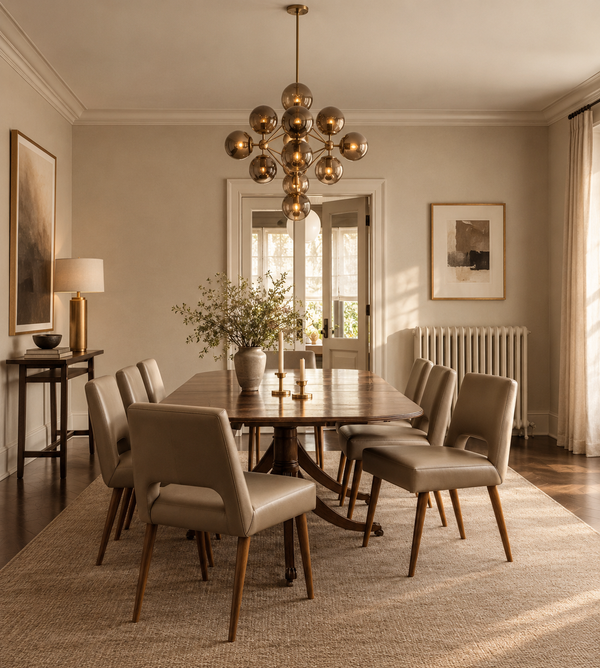
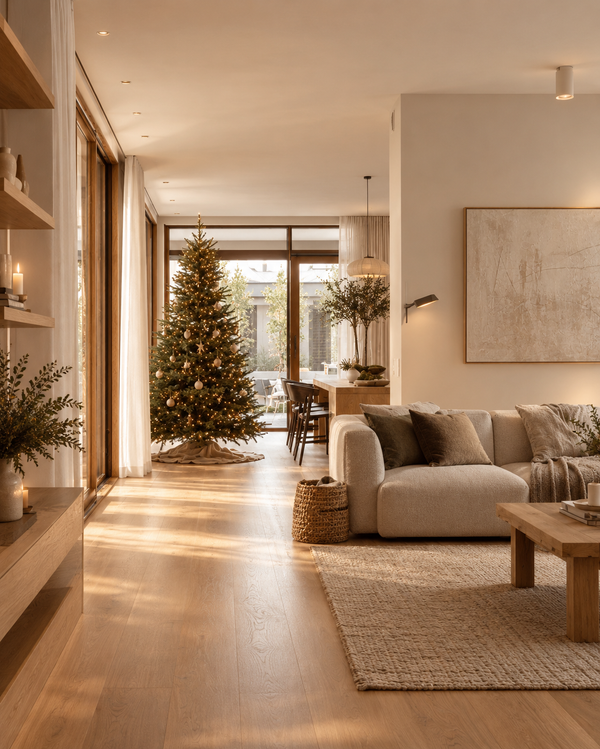
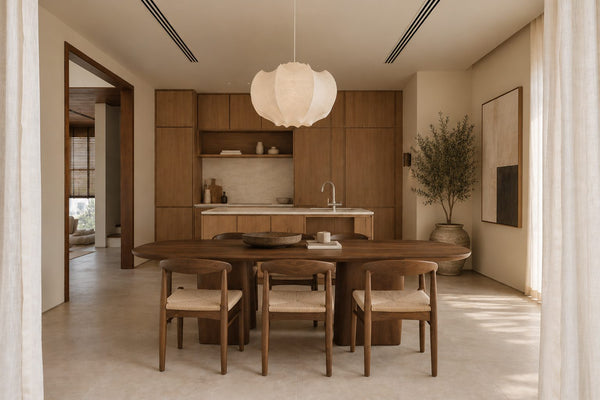
Pale timber. Rounded plaster. A low cream sofa. Concealed storage. One sculptural vessel sitting perfectly alone. Nothing out of place — and almost nothing to tell you who lives there.
The rooms are beautiful. That is not the criticism.
The problem is that many could be lifted from one home and placed inside another without losing their meaning.
For a while, luxury interior design became very good at disappearing. Possessions were hidden, finishes matched and daily life was edited away.
But perfection has become easy to reproduce.
Personality has not.
The new luxury is not necessarily louder, darker or more decorated. It is more specific: materials that reward touch, furniture chosen for the room rather than the trend, art with meaning and enough of the owner's life in the design to make it unmistakably theirs.
It is not a home that could belong to anyone.
It could only belong to you.
Perfection is portable. Personality is not.
This is not another aesthetic
There is much worth keeping from minimalism: discipline, breathing room and the understanding that not every surface needs to be filled.
Japandi returned attention to craft and natural materials. Wabi-sabi reminded us that age and imperfection can be beautiful rather than something to disguise.
The problem began when those ideas became a formula.
Pale oak. Beige upholstery. Rounded edges. A limewashed wall. One carefully imperfect bowl. A philosophy became a shopping list.
Replacing beige with terracotta, or Japandi with an entirely mid-century room, would simply exchange one prescribed look for another. A room full of walnut, rust and sculptural lighting can feel just as staged if none of it is connected to the person living there.
The more interesting shift is away from choosing a style as an identity and towards designing from the inside out: how you live, what you already love, what the rooms must do and the atmosphere you return to most naturally.
A style can provide a vocabulary.
It cannot write the story.
Warmth and texture are relationships
Warmth is often described as though it can be bought in a tin.
Choose a warm white. Add beige. Introduce terracotta.
But a room can contain all three and still feel cold.
Warmth comes from the relationship between light, material and use: evening light on timber grain, linen against smooth stone, a dark cabinet beside a softly coloured wall, or a lamp placed low enough to create intimacy rather than asking the ceiling to light everything.
It may come from olive, tobacco, ochre, burgundy or a blue deep enough to feel enveloping. It may also exist in a pale room where the whites have depth, the timber has visible grain and the fabrics respond differently throughout the day.
The question is not simply whether a colour is warm.
It is what happens when that colour meets the flooring, daylight, art and materials already in the room.

Texture works in much the same way.
A fluted wall, bouclé sofa, heavily veined stone and ribbed cabinet do not automatically create richness. They may simply create competition.
The more convincing approach is contrast: linen beside polished timber, honed stone against glazed ceramic, soft upholstery beside aged metal. Each material makes the other more visible.
Natural materials help because they are not entirely uniform. Timber varies. Stone carries markings. Linen reveals its weave. Leather changes through use. They allow the home to acquire a history instead of remaining frozen at installation.
Luxury is not how many materials a room contains.
It is how much each one rewards your attention.
Borrow the intelligence of mid-century design, not the costume
Mid-century furniture remains relevant because its best ideas are still useful.
The pieces were human in scale. Chairs had recognisable silhouettes. Furniture often sat lightly above the floor, allowing air and light to move beneath it. Timber brought warmth without needing ornament. Practical pieces still had personality.
A freestanding sideboard can bring more character than another wall of seamless cabinetry. A sculptural chair can give a quiet room a centre of gravity. A well-placed lamp can shape the atmosphere even when it is switched off.
The more personal approach is to borrow the intelligence of the era — human scale, honest materials and useful forms — and let it sit beside contemporary furniture, inherited pieces, local craft and art collected at different times.
It should not become a costume the whole home is required to wear.
Proportion is the quietest form of luxury
Before colour, texture or art, there is proportion.
It is one of the least visible parts of a well-designed room and one of the first things you feel when it is wrong.
An expensive sofa can still appear uncertain when the rug beneath it is too small. A beautiful painting can look incidental when it is underscaled for the wall. A large room can feel mean when every piece has been selected too cautiously. A compact room can feel smaller when too many small objects create a forest of edges.

The rug gathers the furniture. The curtains properly frame the window. The pendant relates to the dining table rather than the centre of the ceiling. Art is given enough wall to hold its presence.
A room does not feel luxurious because every wall has been filled. Sometimes the more generous decision is to leave a surface uninterrupted, allow one chair to stand alone or stop the cabinetry before it consumes the architecture.
Restraint is not emptiness. It is the edit that makes character legible.
One extraordinary chair has more presence when it is not surrounded by five other statement pieces. A wall of books feels richer when the adjacent surface is calm. An inherited table deserves to be seen rather than buried beneath layers of styling.
The new luxury is not the maximum possible amount of design.
It is the absence of generic decisions.
Your life should be one of the materials
Personalisation is often treated as the final layer.
The renovation is completed. The furniture arrives. Then photographs, books and a few sentimental objects are placed around the room to make it feel less generic.
By then, much of the opportunity has passed.
The things that matter to you should influence the design from the beginning.

A significant painting may determine which wall remains uninterrupted and how it is lit. A collection of books may shape the depth of the shelving. An inherited dining table may guide the palette of the open-plan room. A record collection may require storage, power and a place to sit and listen — not merely a cabinet added afterwards.
The way you make coffee. Where luggage lands. The place a dog waits near the entrance. The chair a parent prefers. The number of people who appear when the family gathers.
A deeply personal home makes room for these things without treating them as visual problems to hide.
Art should not be selected simply because it matches the sofa. Bespoke work should not exist merely to prove that it was expensive. Custom design earns its place when it responds precisely to a life: a console shallow enough for a narrow entrance, a banquette shaped around the way a family eats, a library designed for the books already owned.
The most meaningful decisions may not announce themselves to a visitor.
The person living there feels them every day.
Your life should not be added after the design is finished. It should be one of the materials.
How a designer turns personality into a home
A good interior designer does more than identify a style you like.
They look for the pattern beneath your references: the materials you repeatedly respond to, the amount of visual calm you need, the way you use light, the pieces you value and the life the rooms must support.
You may show them a mid-century apartment, an English country kitchen and a contemporary Japanese house. On the surface, they appear unrelated.
But perhaps all three contain deeper timber, generous furniture, soft evening light and objects that look collected rather than styled.
That pattern is more useful than any label.
The life comes before the layout
Good design begins before renovation, fabrication or major furniture orders.
The first conversations should establish who uses each room, what is staying, what frustrates you, how you entertain and how you want the home to feel on an ordinary day.
A dining room intended for quiet family breakfasts will not be planned in the same way as one expected to hold twelve people most weekends.
Proportion comes before product
Circulation, sightlines, furniture scale and the relationships between rooms should be resolved before individual pieces begin competing for attention.
A sofa is not chosen only because it is beautiful. Its depth, height and visual weight must make sense beside the rug, tables, lighting and architecture around it.
Materials become one story
Timber, stone, metal, paint, textiles, art and existing pieces should be reviewed together and in the actual light of the home.
They need to belong to the same conversation.
A considered scheme has enough repetition to feel coherent and enough variation to avoid looking manufactured.
Atmosphere becomes buildable
“Warm, layered and relaxed” is not yet a set of instructions.
Lighting positions, electrical points, joinery, curtain tracks, material transitions and furniture dimensions must translate the emotional brief into something a contractor, maker or supplier can execute.
The idea is protected until move-in
Materials become unavailable. Site conditions change. Deliveries move. Contractors suggest alternatives.
A strong designer evaluates each adjustment in relation to the whole home so the finished rooms do not become a series of individually reasonable compromises.
Then comes the final edit: art, books, textiles, lighting and objects arranged until the rooms feel settled, but not staged.
The aim is not to fill every empty surface.
It is to know when the home has enough.
A home that feels like you, not like us
At Sundays in Bed, the brief begins with your life rather than a prescribed look.
We start with what is staying as carefully as what is changing: the furniture you already love, the art that needs a place, the routines the rooms must support and the parts of the home that already work.
From there, one designer carries the wider story through the floor plan, proportions, materials, lighting, furniture, technical decisions and final layer.
Sometimes the right answer is bespoke joinery.
Sometimes it is a freestanding piece with more character.
Sometimes it is keeping the existing floor and placing the budget somewhere that will be felt more meaningfully.
The objective is not to repeat a recognisable Sundays in Bed interior. It is to create a home with enough coherence to feel considered and enough of you in it to feel completely personal.
The measure of the project is not whether someone can identify the designer.
It is whether they can identify you.
The new luxury is recognition
The result should be felt on an ordinary day, not only in the photographs.
The lamp beside the chair you naturally choose. The dining table that works as well for breakfast as it does for friends arriving unexpectedly. The artwork you still pause in front of. The storage that supports daily life without making the home feel overbuilt.
Good design does not ask you to perform a more polished version of yourself.
It makes your actual life feel more considered.
The new luxury can be restrained or layered, contemporary or traditional, quiet in colour or full of it.
What matters is the quality of attention behind the home.
The proportions feel comfortable. The materials remain convincing up close. Art and objects have a reason to be there. Existing pieces are allowed to carry their history.
It feels warm enough to welcome you, textured enough to reward time and touch, and restrained enough for meaningful things to remain meaningful.
Most importantly, the same design would feel wrong in someone else's home.
A showroom demonstrates what a room can contain.
A personal home reveals who it belongs to.
The best compliment is not “It looks like a magazine.”
“This could only be your home.”

The first conversation
Design a home that could only be yoursBring the pieces you already love and the references you keep returning to, and we will talk through proportion, materials and how much support your home actually needs.
- Floor plan
- Pieces you own
- Your references
An honest first conversation, before the design becomes a renovation.
About Angelica Lee
Chief Home Maker and founder of Sundays in Bed, award-winning interior designer. Learn more about Angelica →