

In this guide
Almost every project starts the same way. Someone opens a folder of saved images on their phone and hands it over, slightly apologetically, and says: I don't really know what my style is. I just know I like this.
Then we look at the folder and it is, quietly, entirely coherent. Thirty images with the same light in them, the same three materials, the same restraint. The style was never the problem. Naming it was.
What people are actually worried about is different, and more reasonable: they are afraid of committing to something now that will look obviously dated in three years, when the loan still has seven to run. So let's start there.
The short version
Most people cannot name their style, and they do not need to. What they can name is what they would regret.
- Beige did not leave. It picked up texture and a bit of depth.
- “Collected” means it arrived over time, not in one delivery.
- The pieces nobody regrets tend to be the quiet ones.
What happened to beige
If you have spent any time on design Instagram this year you will have seen it declared: sad beige is over. The flat, cool-toned, everything-matching neutral look that defined new-build interiors for most of a decade has been called time on.
It had that name for a reason. Greige walls, flat-front cabinetry, one neutral repeated across every surface with almost no texture or contrast anywhere. It photographed beautifully. It also tended to feel slightly anonymous once you had lived in it for a few months — like a very nice hotel corridor.
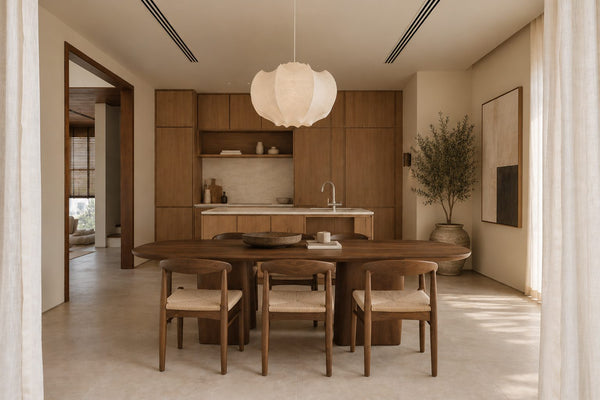
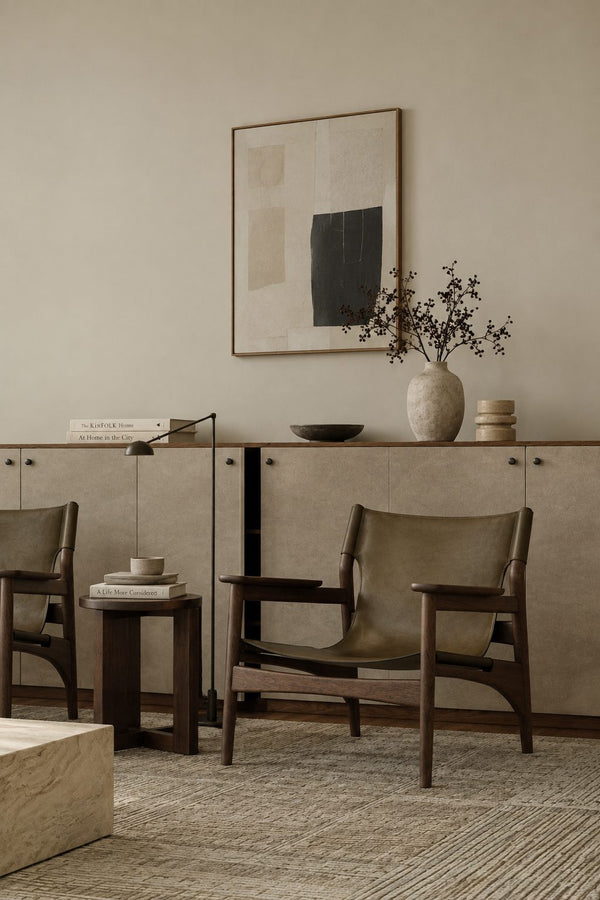
The useful thing is what replaced it, because it is not another colour. Nobody sensible is saying beige is out and terracotta is in. The shift is toward texture: wood grain you can actually see, woven and natural fibres, aged pieces sitting beside new ones. Fewer flat matte surfaces. More visible material character.

Which, if we are honest, is less a trend than a correction — a return to designing with real materials and pieces gathered rather than ordered in one go. That is roughly how homes felt before flat minimalism arrived, and it is why it does not date: it was never chasing a colour in the first place.
What "collected" actually means
"Collected" gets used as a vague compliment, but it means something quite specific, and it is the single word that best describes what we are aiming for in every home we work on.
A collected room has pieces from different moments. Something inherited. Something found secondhand. Something new, bought deliberately. Something slightly imperfect that stayed anyway. It is the opposite of a room furnished from one catalogue in a single delivery — which, however nice each piece is on its own, reads as decorated rather than lived in.
Collected is not the same as cluttered. A room can be collected and still be calm and spare. The difference is that what is there was chosen for a reason rather than added to complete a look. Fewer, more considered things, mixed across eras, reads as more collected than a room packed with matching new furniture.
It does not require money, either. A single old wooden stool, a secondhand mirror, something passed down — the mix is what creates the feeling, not the value of any one piece. And it is the honest answer to the dating problem, because a room that was never built around one moment does not go out with that moment.
A room built entirely from what is trending now looks dated the day the trend moves. A collected room was never built around a single moment, so it has nothing to fall out of.
The five things people actually regret
Some decisions age fine. Others go off faster than the renovation loan does. These are the five we see regretted most often, roughly in order.

The colour of the year. Whatever is having a moment will, by definition, stop having one. Paint is cheap to redo, which is the mercy — but a feature wall in a strong trending shade is very often the first thing someone wants gone by year three. Warmer neutrals with real depth in them age considerably better.
A silhouette instead of a shape. A very of-the-moment furniture outline — the curved sofa everyone had at once — dates far faster than a simple, well-proportioned one. Classic forms are not boring. They are just not tied to a single year.
One finish everywhere. A whole kitchen or bathroom in a single stone and a single metal reads as intensely of its moment once that material's popularity cools. A little deliberate variation ages more gracefully than total consistency.
Built-ins sized around furniture you have not bought. Joinery made to fit a specific sofa or bed you are still planning to buy is a common and expensive regret. The furniture changes; the carpentry does not. Design built-ins around how you live and the real dimensions of the room instead.
Skipping anything with history. A home made entirely of new things has nothing in it that is only yours. One piece with some age on it does more for a room's character than another new purchase will.
A field guide to the looks we see
Style is easier to recognise than to name — which is why our quiz works with images rather than a dropdown of style labels. Still, it helps to have words. These are the five we see most across Kuala Lumpur and Selangor homes.

Modern minimalist
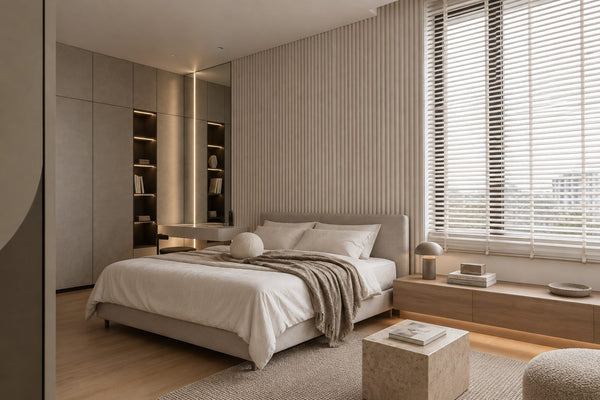
Clean lines, restrained colour, a firm edit of what earns a place in the room. Storage is built in rather than added on, so surfaces stay clear. It suits homes where you want the space itself — the light, the proportions — to do the work rather than the furniture.
Calm and quiet
Soft muted tones, natural materials, furniture chosen for how it feels as much as how it looks. Nothing shouts. This is the one most often asked for by people coming home from a demanding job who want the house to slow them down.
Timeless classic
Furniture and finishes chosen to still look right in ten years rather than this season. Neutral bones, considered proportions, quality over trend. The lowest-risk style to commit to in a long-term home, because it dates slowest.
Family-friendly
Durable fabrics, rounded edges, layouts that survive daily life with children without looking like a playroom. Practical decisions first — what wipes clean, what withstands, what has room to grow — with the style built around those constraints rather than in spite of them.

Characterful and collected
The one described further up. Old and new deliberately mixed, texture over uniformity, a room that looks gathered rather than delivered.
The small things that make a home feel good
None of the above needs a renovation, and some of what makes a home feel like yours is smaller still.

- Plants and daylight, in that order. A room with something living in it reads differently from one without, and it is the cheapest change on this list.
- One corner that is only for sitting in. Not the sofa in front of the television — a chair, a lamp, somewhere to put a cup down.
- Things with a story on display rather than in a box. The objects that are only yours are the ones a catalogue cannot supply.
So which one are you
Most people land somewhere between two of the five, which is fine and normal — a calm and quiet home with a few characterful things in it is probably the most common brief we get.
If you would rather see it than name it, the two-minute style quiz works from images and sends you a personalised estimate at the end. And if what you actually need is help deciding how far to take it, styling versus design sets out the difference.
Where to see this in practice
If you are trying to place your own taste rather than just read about other people’s, here is where our own work sits:
- Our Portfolio — the five looks in the field guide above, in homes people actually live in rather than on mood boards
- Interior Styling — the “collected” route: building around what you already own instead of replacing it
- Our Services — the four ways we work, if the regret list above suggests you need more than styling
Notes & further reading
This piece reflects ongoing work across Kuala Lumpur and Selangor.
About Angelica Lee
Chief Home Maker and founder of Sundays in Bed, award-winning interior designer. Learn more about Angelica →

Your home
Not sure which of these your home wants?A few questions about your rooms and your budget, and a personalised estimate in your inbox.
- Your rooms
- Your budget
- Move-in date
Two minutes. No obligation, and no call required.